
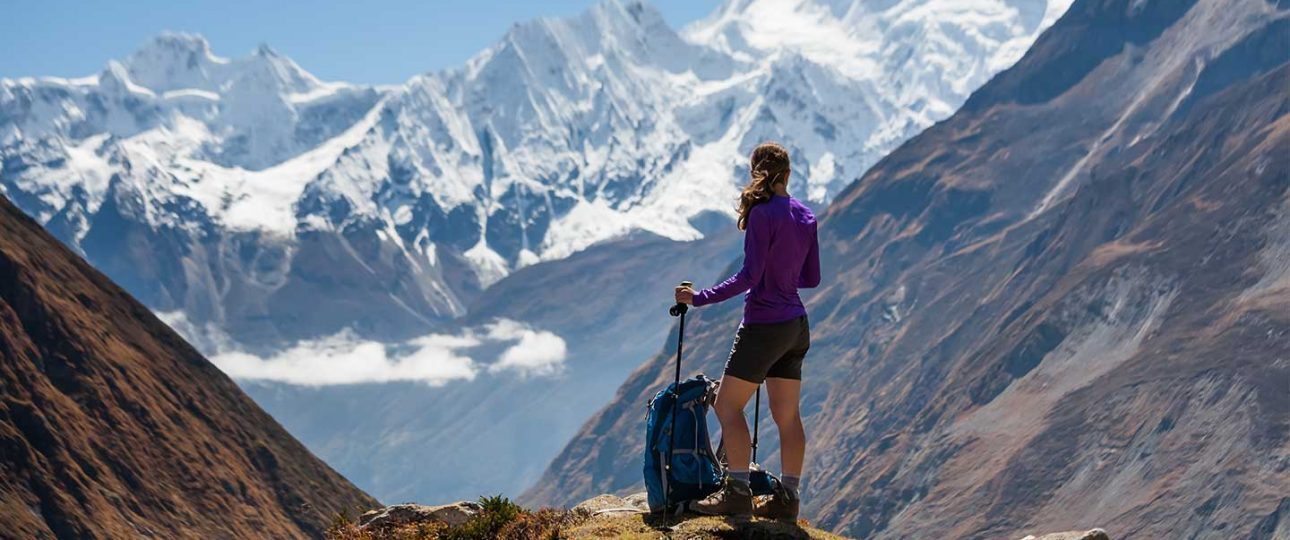
Being a delicate experience sport, nearly anybody’s insensible state of being can go trekking. To get started into trekking start with day climbs, getting back to your beginning stage at night.
Proceed onward to a multi-day journey that is moderately simple, so as to become more acquainted with your capacity and inclination. You can wander into the mountains with an accomplished traveler, join an undertaking club, or go with a presumed experience travel organization.
It’s anything but a smart thought to wander out into the mountains alone – except if you happen to be an inaccessible relative of the legendary Himalayan sasquatch (or a yearning Reinhold Messner, the primary individual on the planet to have ascended every one of the fourteen 8000m pinnacles, including the principal oxygen-less climb and later the main independent rising of Everest).
Trekking in India
Trekking in India began when the land was occupied in ancient occasions. There are maybe the same number of trekking courses in India as there are Indians.
It was in the 1970’s and 1980’s that traveling began picking up in fame as a recreational/experience sport. Various strict destinations and sanctuaries the nation over, particularly in Jammu and Kashmir, and in the Garhwal district of Uttarakhand –, for example, Badrinath, Amarnath, Gangotri, Hemkund, Joshimath, Kedarnath, Vaishno Devi and Yamunotri – involve trekking for two or three days in the mountains. Journeying in India has developed by a wide margin and the current traveling situation is promising, with a huge number of Indians and outsiders hitting trekking trails every year.
What India can flaunt is probably the most staggering journeying courses on the planet – a significant number of the mountain goes in the Ladakh and Zanskar Himalayas are above 5000m. In any case, there are a lot of gentler and littler path, at various heights, both in the mountains and in the woodlands. In case you’re searching for less difficult climbs, you’ll discover bounty in the Western Ghats and the Nilgiri Hills of south India (Munnar and Wayanad in Kerala, Coorg in Karnataka, and around Ooty in Tamil Nadu).